
Destination guide

Hue

Imperial history, garden houses, pagodas, regional food and a slower pace along the Perfume River make Hue worth more than a quick monument stop.

Hue works best when the Imperial City is only part of the stay. Two full days let travellers see the former capital at a comfortable pace and still spend time in the neighbourhoods, gardens and religious sites that give the city its character.

The Perfume River gives Hue a natural shape. The Citadel sits close to the city centre, while royal tombs, Kim Long garden houses, pagodas and residential districts spread along and beyond the river.

For most private groups, the best stay mixes one major imperial visit with quieter time outside the monument circuit. That balance is what makes Hue feel different from Hoi An and Da Nang.
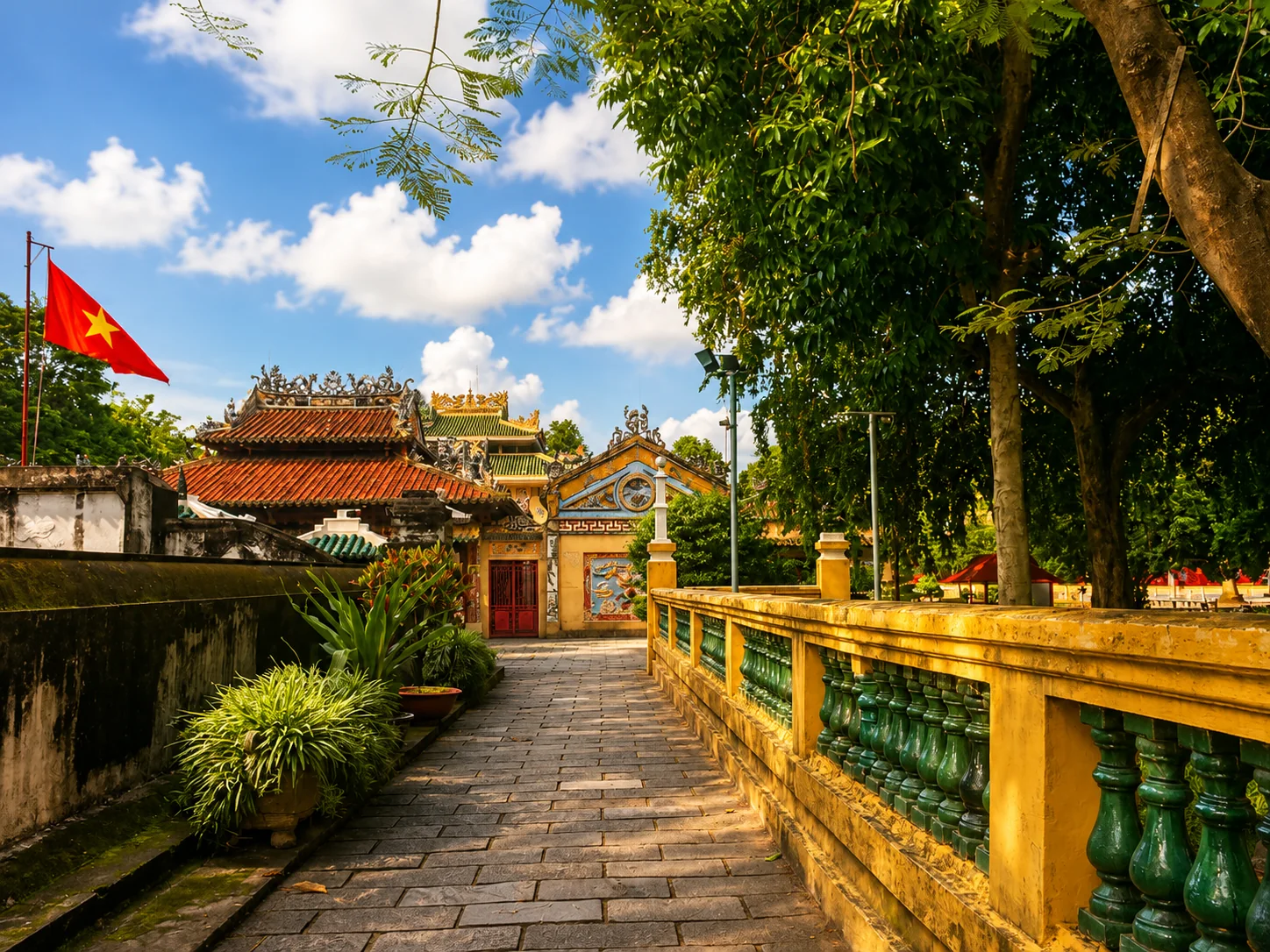
Walkway inside Hue Imperial City
The Imperial City is important, but it should not take over the whole stay.
01

Start with the Imperial City, then leave time for the rest of Hue

A guided morning in the Imperial City is usually enough for most leisure groups. Focus on the main gates, ceremonial areas and a manageable selection of surviving buildings rather than trying to cover the entire complex.

Hue can be hot and exposed by late morning, so an earlier start and a vehicle waiting nearby make the visit more comfortable.

02

Choose one or two royal tombs well

Tự Đức, Minh Mạng and Khải Định each feel different. Tự Đức is especially strong for landscape and atmosphere, Minh Mạng for scale and symmetry, and Khải Định for its dramatic mix of Vietnamese and European decorative styles.

Most groups are better served by one carefully chosen tomb, or two on a longer day, than by trying to collect all three.

03

Spend time in Kim Long and the garden-house districts

Kim Long provides a quieter look at Hue through family homes, gardens and residential lanes. A hosted tea or home-style lunch can work very well when the household has time to receive the group and the visit is not rushed.

Short cycling routes are possible on the flatter lanes, with a vehicle alternative for travellers who prefer not to ride.

04

Pagodas add another side of the city

Từ Hiếu is one of the best places for a quieter Buddhist visit, especially when combined with a vegetarian lunch or time in the surrounding pine landscape. Thiên Mụ is easier to fit into a classic first-time route and works well with a river crossing or nearby garden-house visit.

Religious visits should allow time to look around quietly rather than turning every stop into a guided lecture.

05

Plan at least one meal around Hue itself

Hue food is one of the strongest reasons to slow down here. A good day can move from a market or garden-house lunch to vegetarian chay cooking, small local dishes or an evening cyclo food route.

The aim is not to turn every meal into a tasting programme. One or two well-chosen food experiences are enough to show how distinctive the region is.

06

La Vang can fit naturally into a Central Vietnam journey

For Catholic and faith-based groups, La Vang is usually planned as a dedicated visit rather than squeezed between the Citadel and Hoi An. It can be combined with a longer Hue stay or used on the onward road when timing and worship plans make sense.

Mass, parish access and special feast periods should be confirmed separately from the sightseeing schedule.

07

Two nights work; three nights make Hue much easier

Two nights normally provide one full sightseeing day. Three nights allow the Imperial City, a tomb, garden houses, religious life and food to be spread across two days without forcing early starts and late finishes.

For first-time groups on a compact national route, two nights can be enough. Food, faith, history and slower-travel groups usually make better use of three.

Related journeys

Journeys with time to enjoy Hue

11-day Vietnam classic journeyView journey →Vietnam from sea to empireView journey →15-day Catholic pilgrimage in VietnamView journey →