Food, place and regional identity
HAN-SGN-15-TH
Vietnam foodways
Travel from Hanoi to the Mekong through farms, markets, family kitchens and working producers, following the regional food traditions shaped by land, migration and trade.

Travel from Hanoi to the Mekong through farms, markets, family kitchens and working producers, following the regional food traditions shaped by land, migration and trade.
Travel through farms, family tables, ports, markets, religious settings and working producers from Hanoi to the Mekong Delta. Meals and visits show how climate, migration, trade and economic change have shaped distinct regional ways of eating.
The route follows seasonal agriculture around Hanoi, court and Buddhist foodways in Hue, maritime exchange in Hoi An, migration and commerce in Saigon–Cholon, and the coconut, rice, palm sugar, fish and fruit economies of the Mekong Delta. Meals are selected to reflect each region while leaving enough time for the cities, landscapes and cultural visits beyond food.
Three nights each in Hanoi and Hue allow regional depth, followed by one night in Hoi An, three nights in Ho Chi Minh City and a slower four-night Mekong sequence before the final departure.
Meet the main group arrival and transfer to a central hotel. Meet the local team and gather for a welcome dinner. The guide introduces the regional ingredients, farming landscapes and food traditions that will appear along the route.
Travel to a selected farm outside Hanoi to see how cooler winters, rainfall and seasonal crop cycles shape northern vegetables, herbs and household cooking. Continue with a farm-based lunch or cooking session using current produce, then return to Hanoi for an egg coffee workshop and the story behind the drink’s wartime origins and urban popularity.
Visit a market or distribution area and follow how produce arrives in Hanoi from the Red River Delta and nearby provinces. Continue through Old Quarter trade streets and family businesses, comparing traditional supply networks with supermarkets, convenience stores and delivery platforms. A relaxed lunch is followed by free time.
Fly to Hue and transfer to the hotel. Keep the rest of the day light after the flight, with time to check in and recover. Subject to arrival time, take a short neighbourhood walk or visit a small local market before dinner.
Travel through rice-growing communities to Thanh Toan, with supported cycling or a private-vehicle alternative. Visit the market and historic bridge as the guide explains how irrigation, village cooperation and seasonality affect household cooking. Continue to a Kim Long garden house for selected meal preparation and a home-style lunch.
Visit the Imperial City and see how court life, ceremony and specialised kitchens influenced Hue cuisine. Continue to Tu Hieu Pagoda, where the guide introduces Buddhist life and Hue’s long vegetarian traditions. Finish the afternoon with time at leisure, then travel by cyclo to a vegetarian dinner that draws on Hue’s household and monastic food traditions.
Travel south to Hoi An. At the Museum of Trade Ceramics, look at selected objects and a map showing Hoi An’s trading links with China, Japan and wider maritime Asia. Continue to the Museum of Folk Culture and selected streets and houses, where the guide points out the local occupations and household food traditions that grew around international commerce.
Enjoy a slower morning in Hoi An before flying from Da Nang to Ho Chi Minh City. After check-in, take a short orientation walk through Saigon’s historic commercial core, passing apartment buildings, cafés, public spaces and religious landmarks associated with successive waves of migration and urban change.
Follow ingredients through traditional retail, family businesses and modern distribution. Subject to operating confirmation, visit a suitable fish-sauce producer or processing facility to see how fish, salt and fermentation become one of Vietnam’s essential seasonings. If a working facility is unavailable, visit another confirmed producer or food workshop with comparable regional context.
Explore selected trading streets, markets, temples and assembly halls in Cholon. Walking through Cholon’s markets, temples and trading streets, see how Chinese migration and family commerce shaped noodles, festival foods and household staples in southern Vietnam. Stop for a selected lunch in the district before continuing the walk.
Travel into Ben Tre, where coconut cultivation shapes the landscape, household production and local income. Explore gardens and small waterways by supported cycling, walking and boat, with alternatives available. Visit selected producers to see how coconut functions as crop, ingredient, household material and commodity, then continue to Long Xuyen.
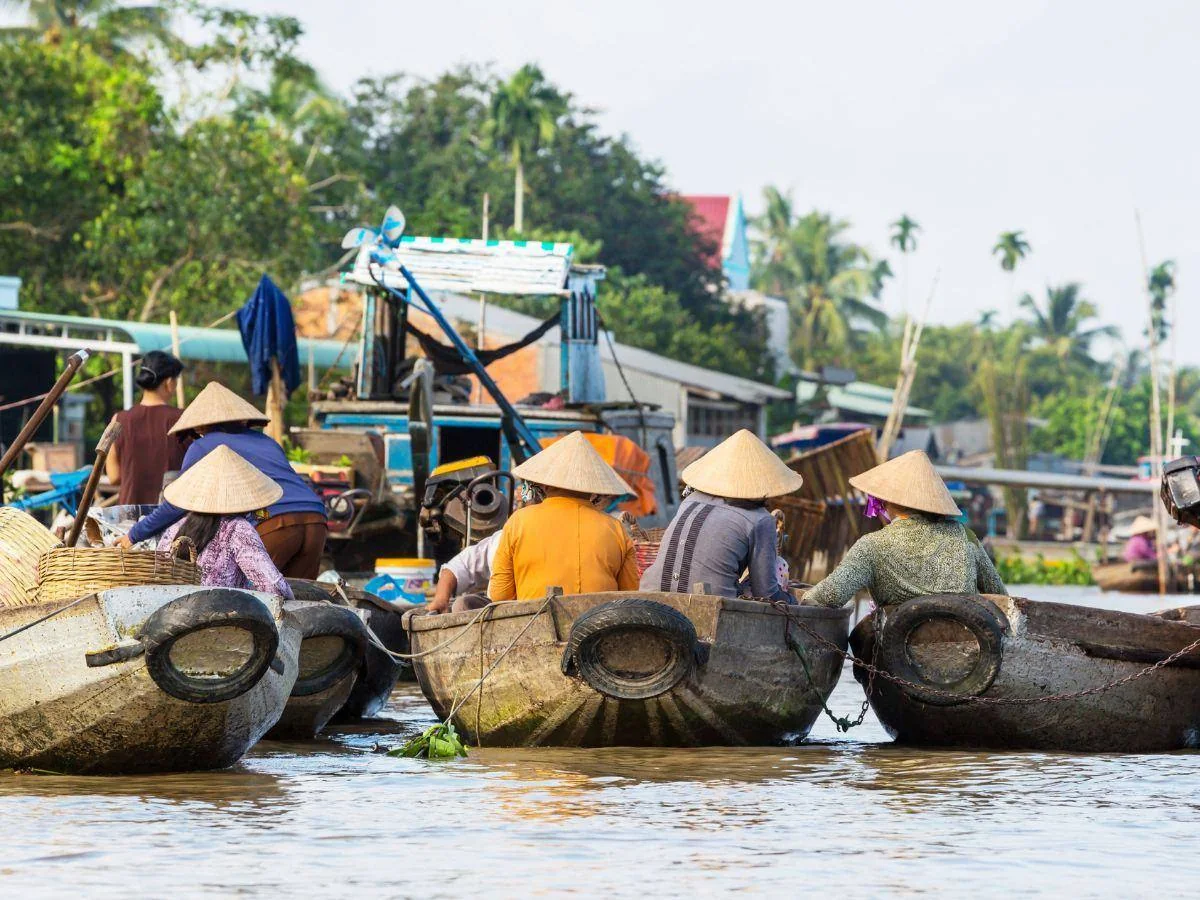
Rise early for a private boat visit to Long Xuyen floating market, then return for breakfast. Visit a confirmed working rice mill to follow paddy through drying, milling, grading and packing, including the uses of broken rice, bran and husks. Continue to Chau Doc after lunch, with the later afternoon left free.
Travel into the Bay Nui region, where mountains, rice fields, Khmer communities and palmyra palms create a distinct food landscape. Meet a household or small producer working with palm sap and sugar, then share a locally prepared Khmer meal using seasonal ingredients from the surrounding area. Return to Chau Doc in the afternoon.
Begin at Chau Doc market, walking among stalls selling freshwater fish, fermented products and agricultural goods in a town where Vietnamese, Khmer, Chinese and Cham communities have long traded side by side. Continue to a mango-growing community near Cao Lanh to learn about varieties, seasonality, cultivation, traders and export standards, then return to Ho Chi Minh City for a farewell dinner.
The morning is free according to flight time. A private transfer is arranged to Tan Son Nhat International Airport, with late check-out or additional arrangements available on request.
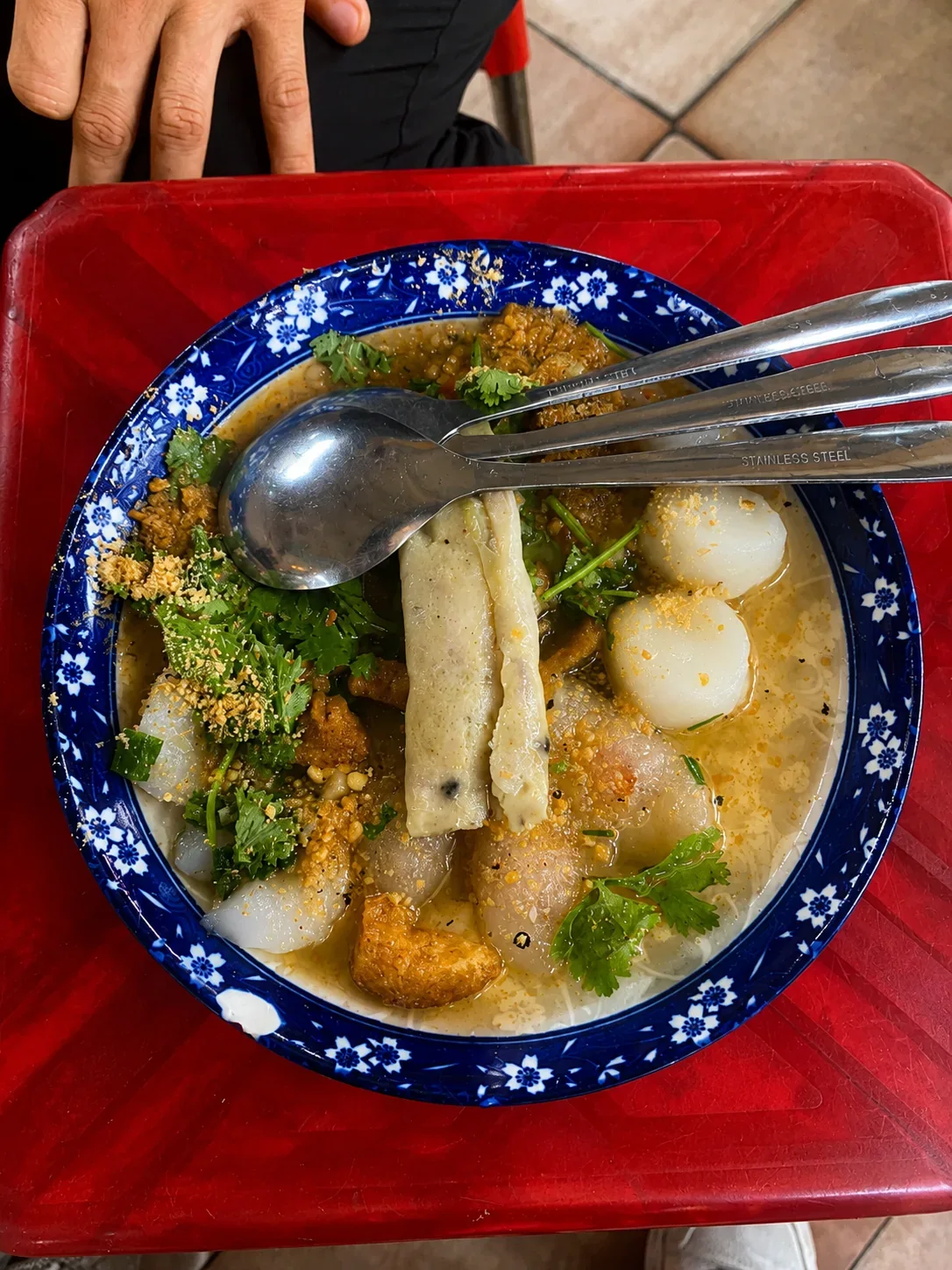
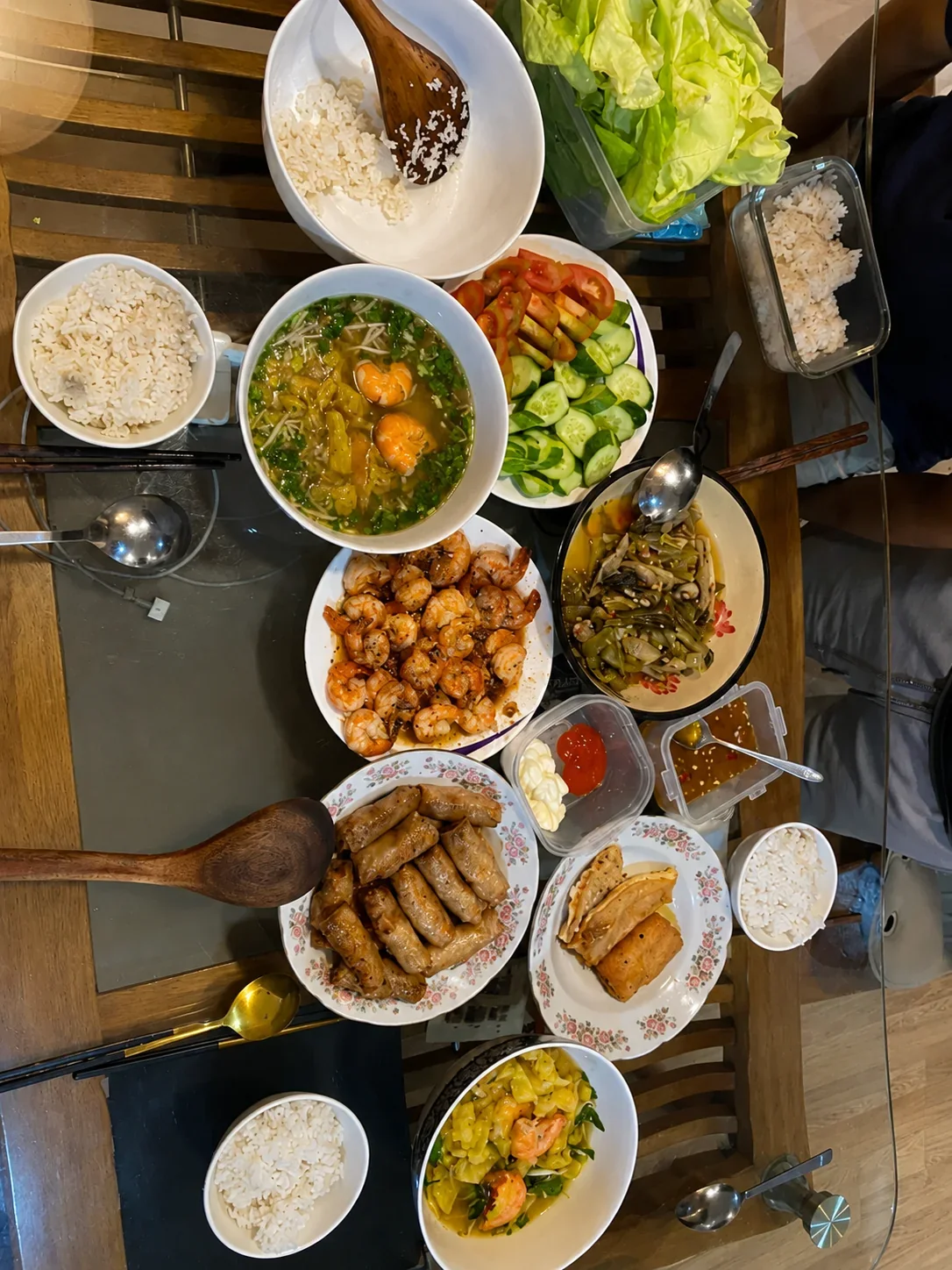
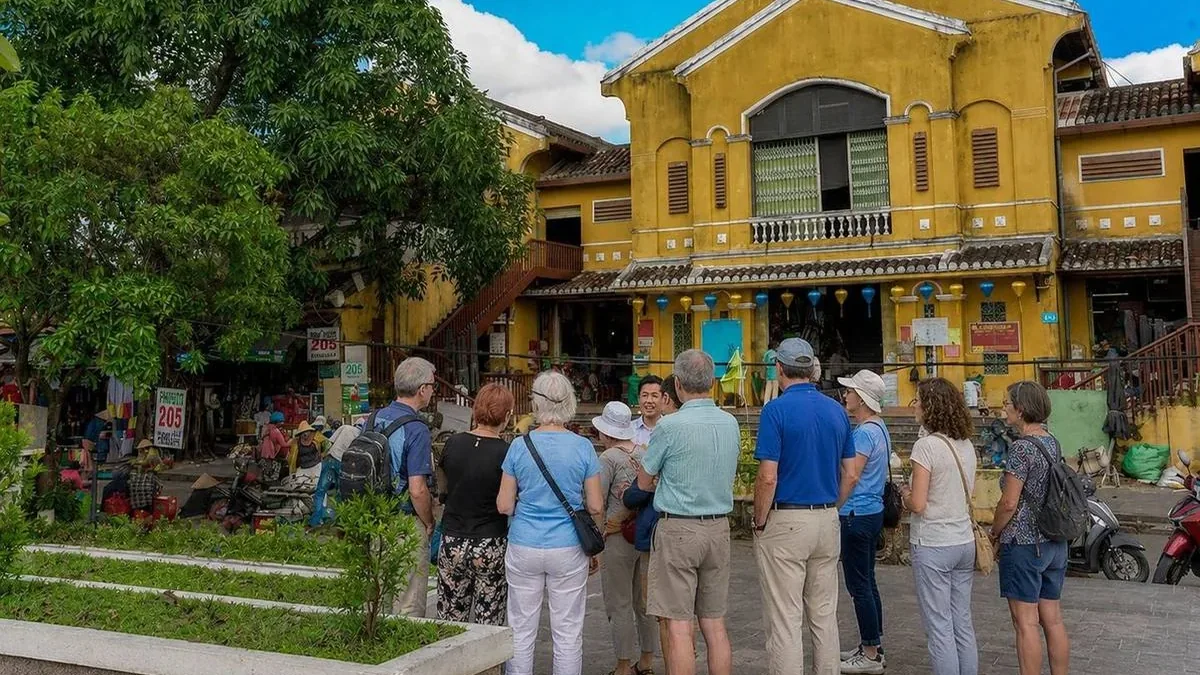
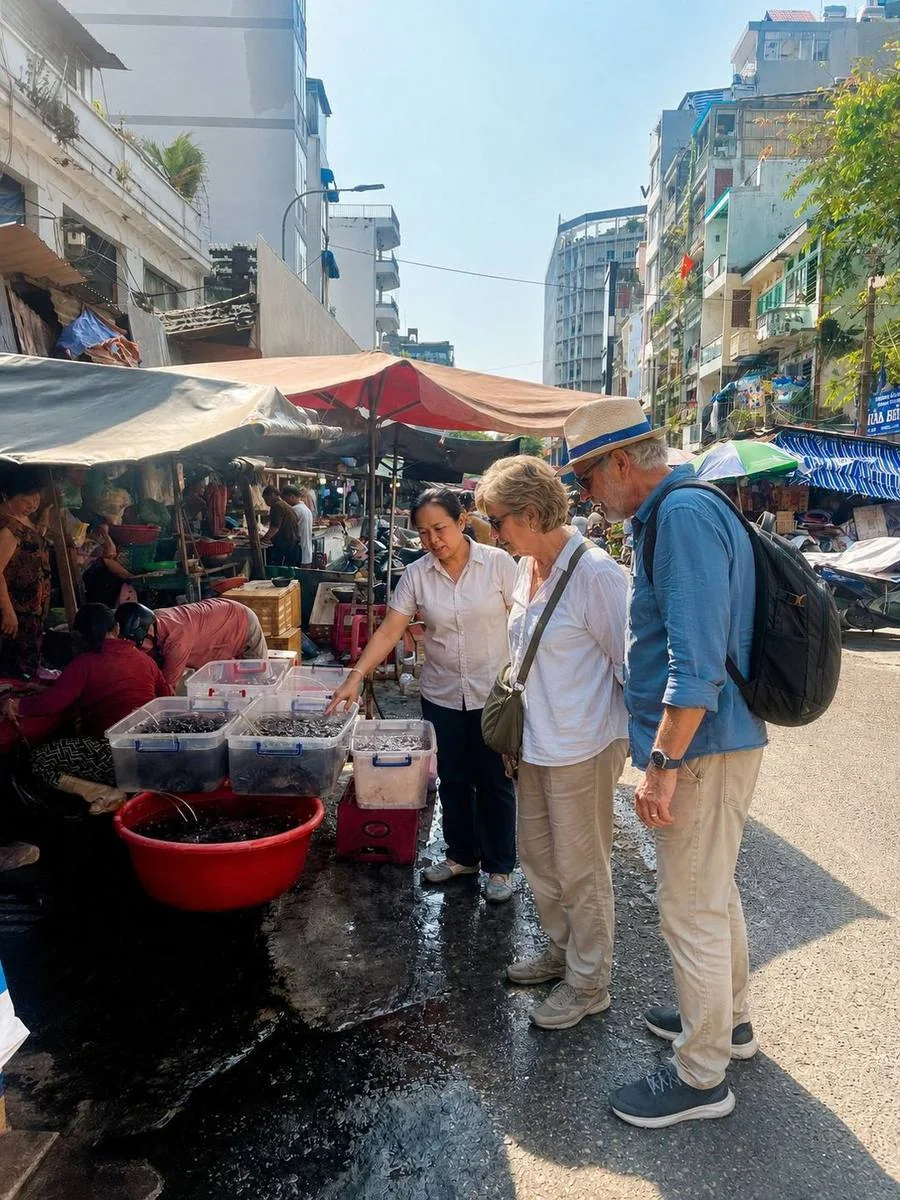
Dietary profiles are reviewed before confirmation. Vegetarian and vegan requirements can be supported, while severe allergies need individual assessment because shared kitchens and common condiments may contain fish sauce, shellfish, soy, gluten or nuts.
Market visits focus on how people shop and cook and never require indiscriminate tasting. Included meals favour vetted homes, restaurants and producers selected for quality, hygiene and operational reliability.
Cai Rang requires one early start; other days include later mornings, hotel breaks or free afternoons. Meals and tastings are spaced throughout the route.
Cycling in Hue, Ben Tre and mango country can be replaced by supported transport. Boat boarding, markets, farms and uneven paths are reviewed against the group’s mobility profile.
Hanoi–Hue and Da Nang–Ho Chi Minh City flights, baggage, transfers, hotel timing and guide handovers are managed as one operating plan. Transfer days remain intentionally light.
Farm, fish-sauce, rice-mill and household visits depend on season, production schedules, permission and safety. Equivalent experiences are confirmed before travel; no unverified facility is promised as a fixed visit.
Hanoi, Ninh Binh, the bays and mountain routes, with practical advice on pacing and connections.
See destination →Imperial sites, garden houses, pagodas, food and how long to stay.
See destination →Hoi An, Da Nang, Mỹ Sơn, craft, food and realistic Central Vietnam weather planning.
See destination →Central Saigon, Chợ Lớn, neighbourhoods, food and wartime sites.
See destination →Compare Bến Tre, Cần Thơ and Châu Đốc before choosing the Delta route.
See destination →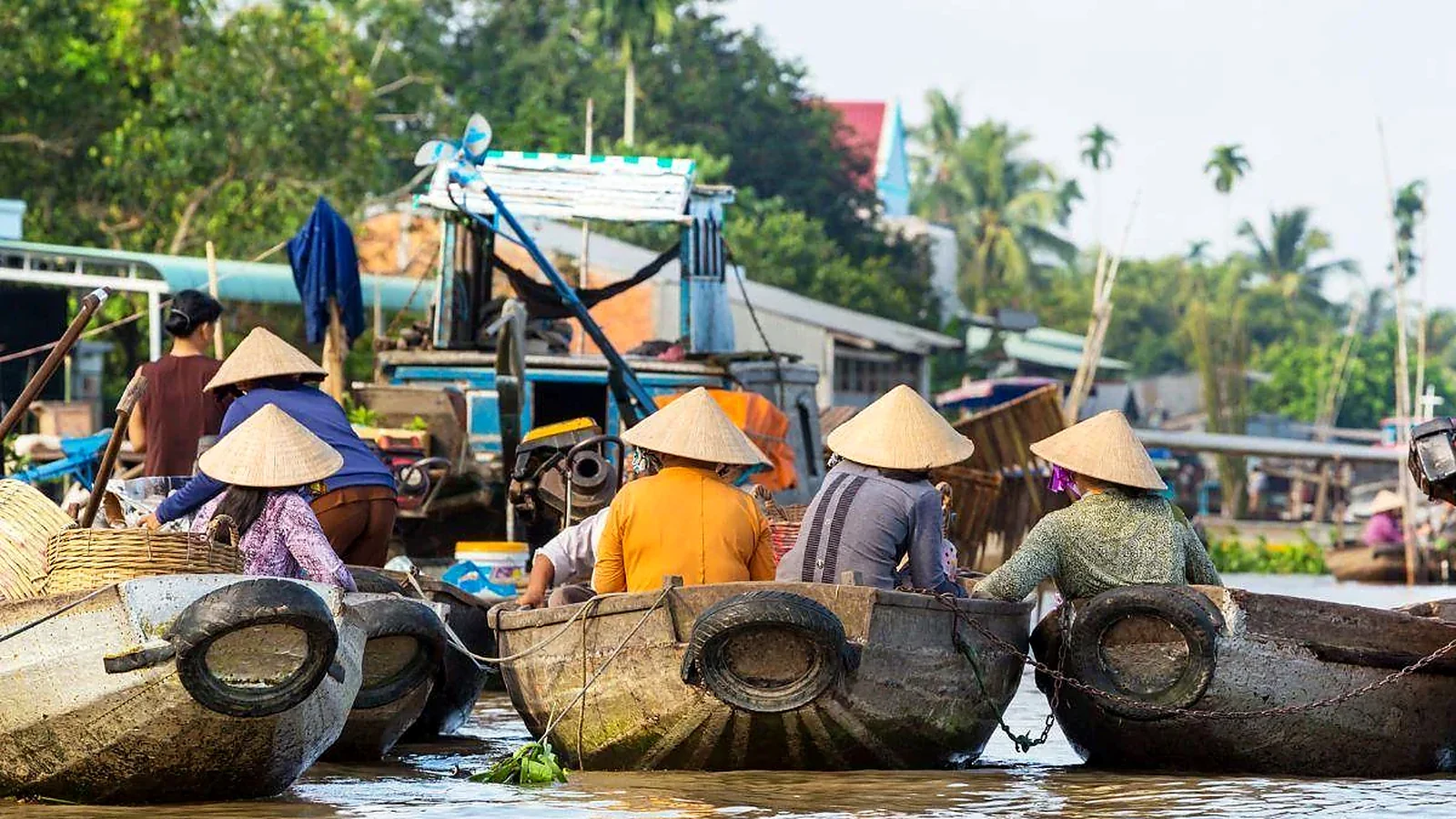
Travel from Saigon through Ben Tre, Long Xuyen and Chau Doc, following coconut, rice, floating trade and the food cultures of the western Delta.
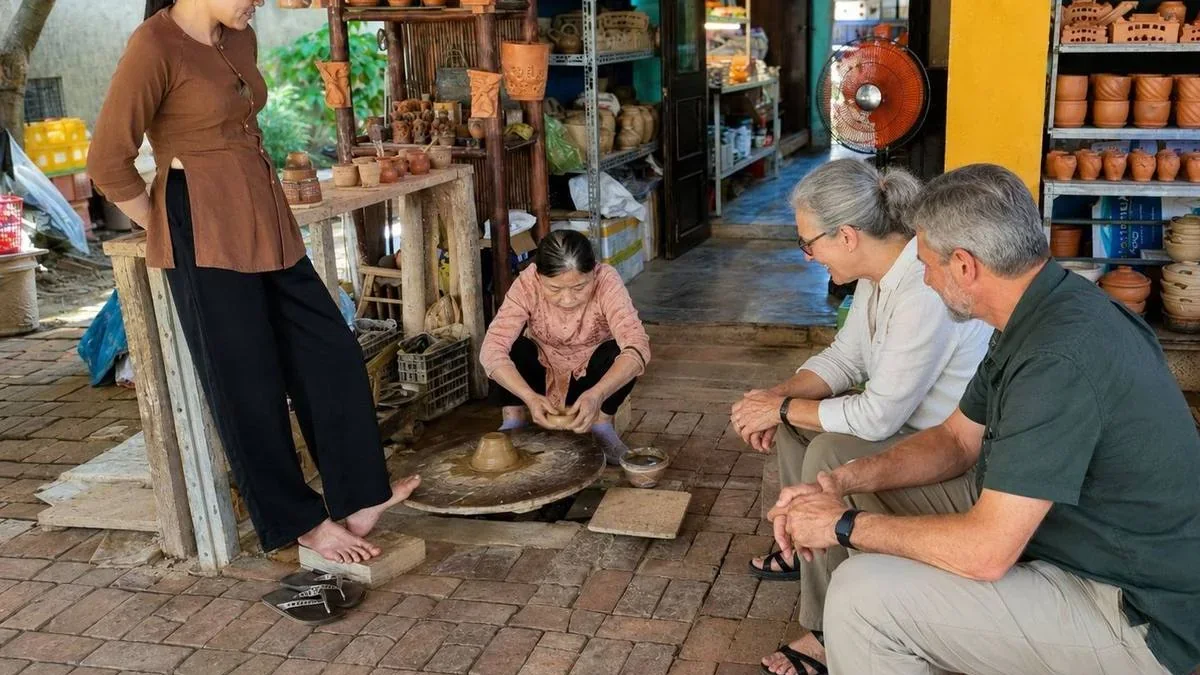
Spend a week between Hue and Hoi An through markets, kitchens, gardens, craft workshops and the everyday food traditions of Central Vietnam.
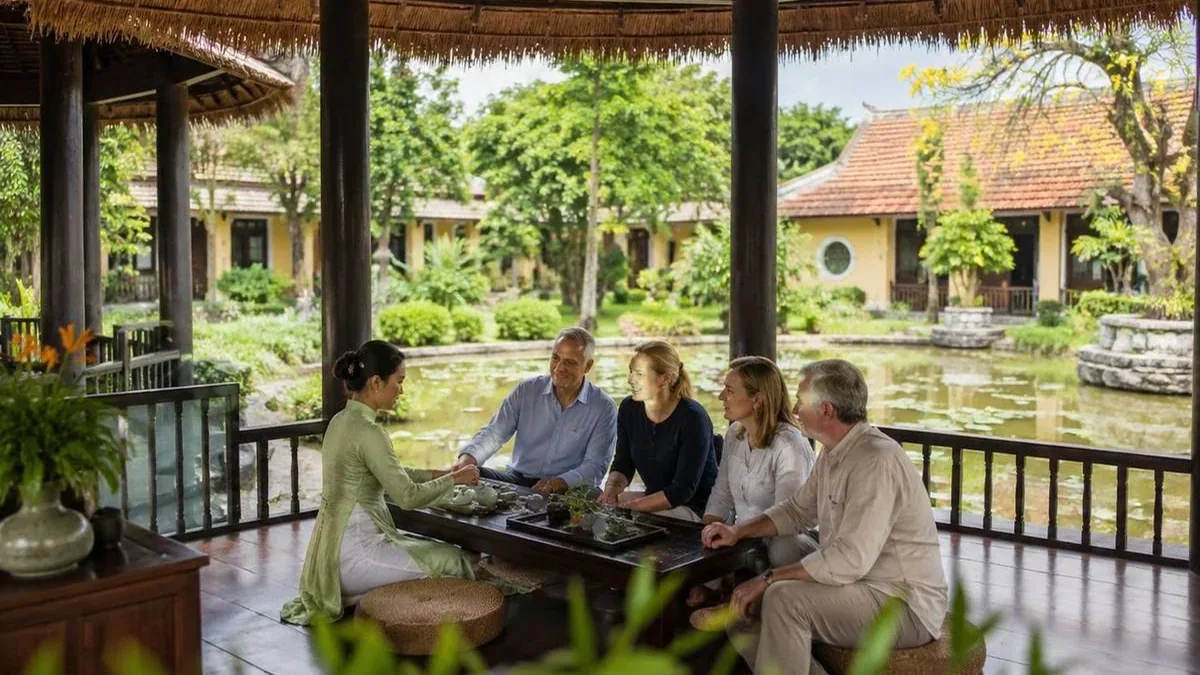
A gentle journey through Vietnamese food, belief and everyday rituals, with Hue as its contemplative centre.
Send the dates, audience and preferred emphasis. We will confirm the route, operating visits, hotel level and proposal timeline.