
Destination guide

Bình Định and Quy Nhơn

Cham towers, Tây Sơn history, a relaxed coastal base and one of Central Vietnam’s most rewarding detours sit within easy reach of Quy Nhơn.

Quy Nhơn is more than a beach stop. With two or three nights, it becomes a comfortable base for the old Vijaya landscape, major Cham towers, Tây Sơn history and time by the sea.

This part of the central coast suits travellers who have already seen the classic Hue–Hoi An route, as well as history and culture groups that want to go further south without turning the trip into a long expedition.

The sites are spread out, so the order matters. A good day combines one or two strong heritage stops with enough time back in Quy Nhơn for lunch, the seafront and a relaxed evening.
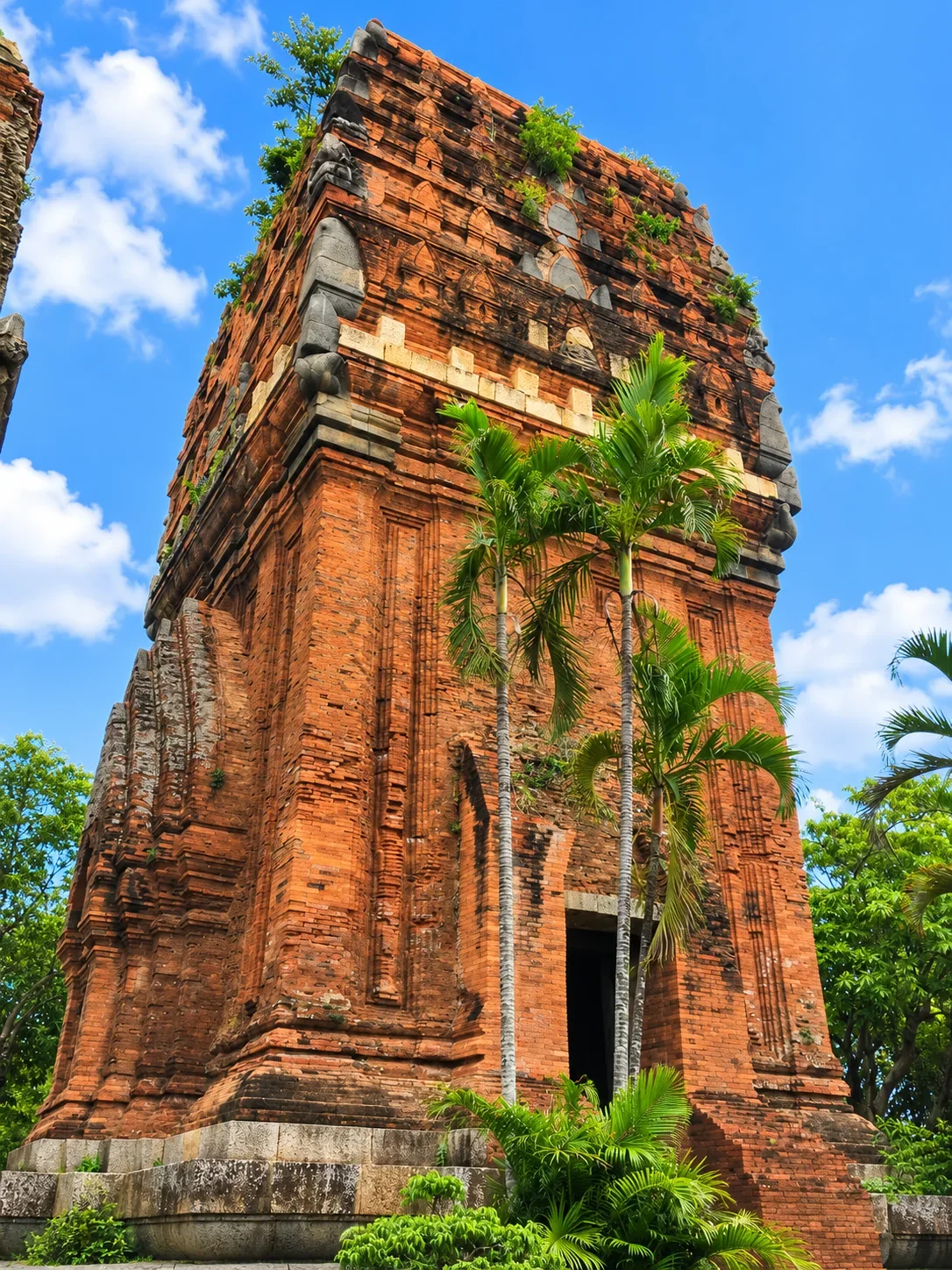
Cham tower near Quy Nhon
Bình Định has some of the strongest surviving Cham architecture in Vietnam.
01

Use Quy Nhơn as the base

Quy Nhơn gives the route a comfortable hotel base, a long seafront and easy access to the major sites of Bình Định. It also provides a welcome change of pace after Hoi An or before an overland journey into the Central Highlands.

The city itself does not need a long sightseeing list. The value is having a pleasant place to stay while exploring the wider province.

02

Choose the Cham sites rather than collecting towers

Bánh Ít is easy to combine with arrival or departure days and gives strong views over the surrounding countryside. Dương Long is worthwhile for travellers interested in the scale of Cham architecture, while Cánh Tiên sits close to the former Vijaya and Hoàng Đế area.

Most leisure groups do better with one or two tower complexes and a good guide than with a full day of repeated architectural stops.

03

Hoàng Đế and Tây Sơn add a second historical layer

The former Vijaya area around Hoàng Đế brings Cham and later Vietnamese history into the same landscape. A site plan or simple map helps because the remains are spread out and not always easy to understand on arrival.

The Quang Trung Museum at Tây Sơn can be added for groups interested in the Tây Sơn movement and eighteenth-century Vietnam. It is best treated as a separate visit rather than rushed into a tower circuit.

04

Keep some coast in the stay

Quy Nhơn works well because the heritage days can be balanced with the beach, seafood restaurants, a seafront walk or a lighter afternoon. Not every hour needs to carry historical content.

For private groups, this is also a good place to add a free evening after a long central-coast transfer.

05

Two nights are the practical minimum

One night usually turns Quy Nhơn into a transit stop. Two nights allow one proper Bình Định day; three give more room for the coast, Tây Sơn or a slower pace.

Travellers continuing south through Phú Yên or Ninh Thuận can use Quy Nhơn as the first part of a longer central-coast journey.

06

It connects naturally with Hoi An and the Central Highlands

From Hoi An and Da Nang, the journey south can be made by road or, for small groups when seats are available, by The Vietage. From the west, the descent from the Central Highlands creates a very different arrival into the coast.

This makes Bình Định useful both as an extension to a classic Central Vietnam trip and as the meeting point between highland and coastal routes.

Related journeys

Journeys that spend real time in Bình Định

Vietnam from sea to empireView journey →10-day central coast: Hoi An to Cam RanhView journey →9-day Central Highlands: Buon Ma Thuot to Quy NhonView journey →