
Destination guide

Châu Đốc and An Giang

Pilgrimage at Núi Sam, border trade, Cham and Khmer communities, rice country and the road toward Cambodia make Châu Đốc one of the most distinctive stops in the western Mekong Delta.

Châu Đốc deserves more than a transit night when the route has time. Two nights allow the town, Núi Sam and one surrounding area to be enjoyed without turning every day into a long road transfer.

An Giang feels different from the coconut country around Bến Tre and the river-city experience of Cần Thơ. Mountains rise out of the rice plain, pilgrimage traffic fills the roads around Núi Sam, and the border brings different communities and trading patterns into view.

This is a strong destination for repeat visitors, food and culture groups, religious-interest journeys and travellers continuing overland or by river toward Cambodia.
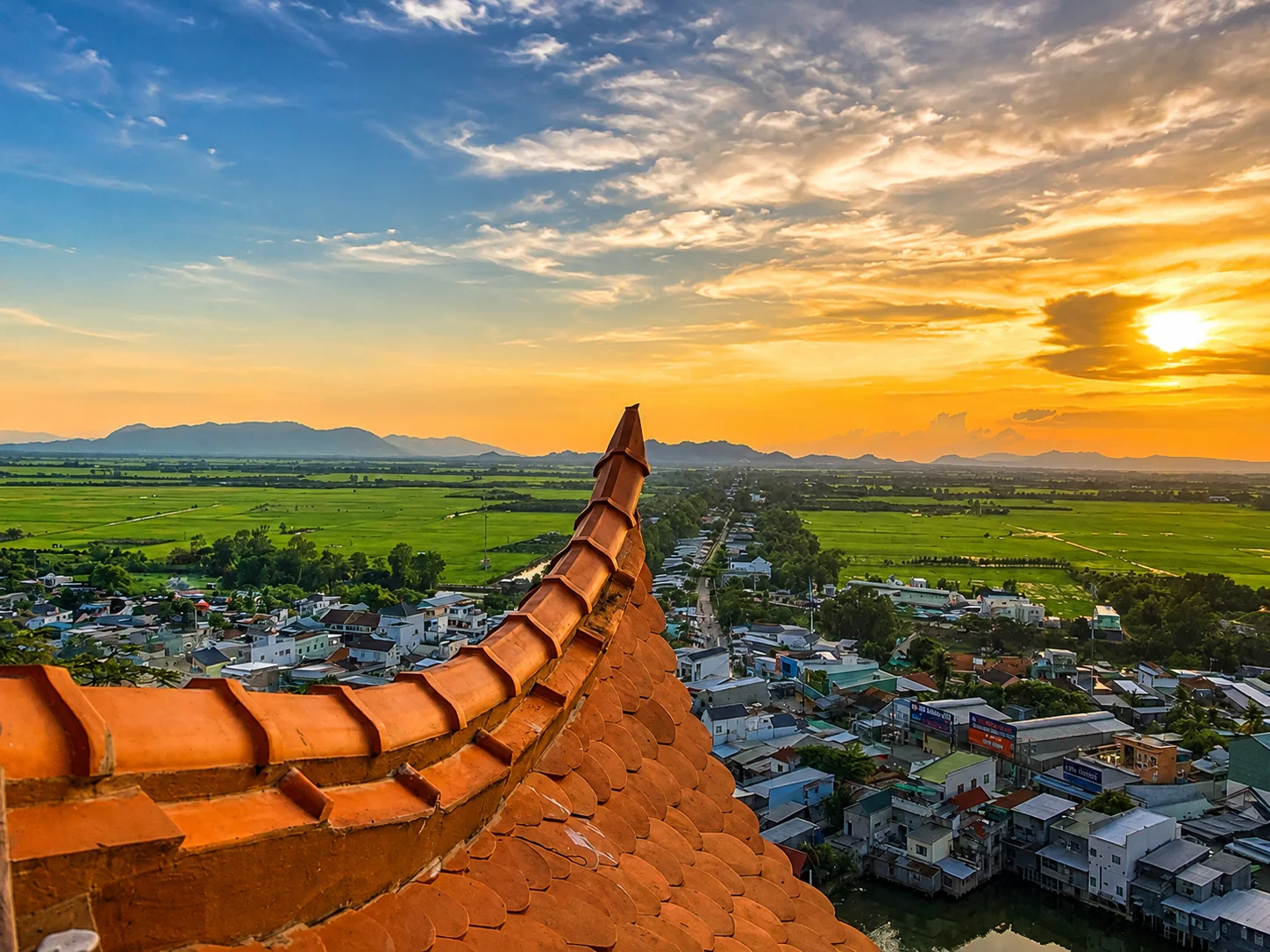
Chau Doc and the rice plains of An Giang at sunset
Châu Đốc sits where river trade, pilgrimage and the rice landscape of An Giang meet.
01

Start with Núi Sam and the pilgrimage landscape

The area around Núi Sam is active throughout the year and especially busy around major pilgrimage periods. Bà Chúa Xứ Temple, nearby pagodas and the surrounding shops make more sense when visited as one living pilgrimage area rather than as isolated religious stops.

Traffic and crowds can change significantly by date, so timing should be planned around the actual travel month.

02

Visit a Cham community with a confirmed local host

Cham communities along the river add a very different side of An Giang. Visits should be arranged with a local host or community contact and should respect prayer times, dress and the fact that these are residential places rather than attractions.

For general leisure groups, a short, well-hosted visit is better than a long formal visit.

03

Trà Sư works well as a quieter afternoon

Small boats through the cajuput forest offer a change of pace after markets and religious sites. Water levels and vegetation change with the season, so the experience should be described according to the travel month rather than sold with one fixed image.

The drive from Châu Đốc is manageable, but it should still be given enough time to avoid a rushed return.

04

Bảy Núi adds Khmer food and a different landscape

The Bảy Núi area is useful for travellers interested in Khmer communities, palmyra palms, local food and the unusual mountain landscape of western An Giang. It works best as a half- or full-day addition for groups already staying two nights in Châu Đốc.

Food-focused routes can include a confirmed household or small producer working with palmyra sugar when the season and access are right.

05

Óc Eo–Ba Thê fits history-focused journeys

The Óc Eo–Ba Thê archaeological landscape is a substantial detour from Châu Đốc and should not be added casually. It is worthwhile for travellers interested in early southern history and archaeology, especially when a guide can connect the local collections with the wider site.

For a general leisure route, Núi Sam, the river town and one surrounding area usually make a stronger two-night stay.

06

Two nights are usually worth it

One night is enough when Châu Đốc is simply the departure point for Phnom Penh. Two nights allow a proper local day. Three can work when adding Bảy Núi, Óc Eo–Ba Thê or a slower food-focused programme.

If the group is not interested in the western Delta, it is better to stop at Cần Thơ than to add the extra road time only for the sake of going farther.

07

It pairs naturally with Cần Thơ, Hà Tiên or Phnom Penh

Cần Thơ is the easiest eastern connection. Continue west to Hà Tiên for a deeper Delta route, or use the river connection toward Phnom Penh when Cambodia is part of the same journey.

This flexibility is one reason Châu Đốc can work as either the end of a Vietnam journey or the bridge into Cambodia.

Related journeys

Journeys that go west to Châu Đốc

9-day Mekong Delta: Ben Tre to Phu QuocView journey →5-day Mekong Delta foodways and river lifeView journey →14-day Hanoi to AngkorView journey →